Manufacturing Industry Financing Trends [2026]: Materials, Equipment, and Working Capital
Key Takeaways
- Manufacturing financing covers equipment purchases, raw materials, labor, and short-term working capital gaps — not a single product, but a set of options matched to specific operating needs.
- 73% of manufacturing businesses say tariffs affected their operations in 2026, with 66% reporting higher supply costs and 46% experiencing margin compression.
- Cash flow is the top challenge for 55% of small business owners, and in manufacturing it is amplified by production cycles where input costs precede customer payments by weeks or months.
- 53% of businesses increased technology use in 2026, and 62% of businesses over $1M in revenue increased tech investment — making equipment and machinery financing one of the most active borrowing categories.
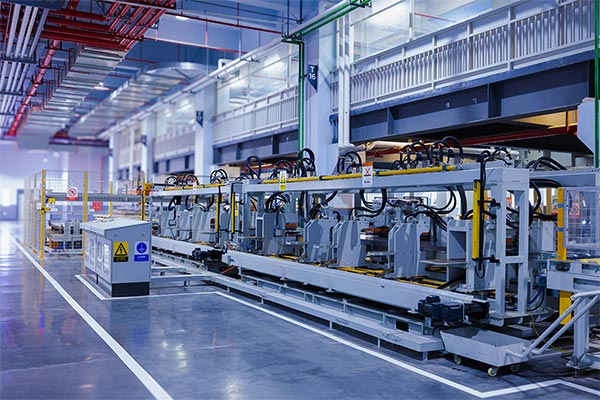
Manufacturing financing is the set of funding products and strategies that manufacturers use to purchase raw materials, acquire or upgrade equipment, cover payroll and labor, manage inventory, and bridge the gap between production costs and customer payments. Unlike general-purpose small business lending, manufacturing financing decisions are shaped by production cycles, supplier payment terms, receivables timing, and the capital intensity of keeping machinery operational and output consistent. In 2026, those decisions are also shaped by tariff-driven input cost increases, inflation pressure on materials and labor, and a borrowing environment where more manufacturers are using financing proactively to protect margin and support growth.
What Is Manufacturing Financing and Why Does It Matter in 2026?
Manufacturing financing encompasses the full range of capital products that production-focused businesses use to keep operations running and support growth. It includes industrial equipment financing for machinery and fixed asset purchases, inventory and materials financing for raw inputs, working capital loans for payroll and operating expenses, and lines of credit for recurring cash flow management. What makes it distinct from general business lending is the production cycle. A manufacturer commits capital to raw materials weeks before finished goods are sold, and customer payment may arrive 30 to 90 days after delivery. That timing structure means a growing manufacturer with healthy demand can still face recurring working capital pressure.
The 2026 environment has added additional pressure points. According to the Fora Financial Business Insights report, 76% of business owners expect revenue growth over the next 12 months and 52% expect favorable economic conditions, but 35% still cite access to capital as a top challenge. For manufacturers, this reflects the reality that growth in order volume can outpace available working capital, making financing not a fallback but a deliberate part of the operating model.
How Manufacturing Financing Supports Production Planning
Production planning requires capital commitments that are made weeks or months before the revenue they generate is collected. Raw materials must be purchased and paid for before they become finished goods. Labor runs on a payroll schedule that does not pause while a customer invoice processes. Machinery must be maintained and operational regardless of where a specific order is in the production timeline. Financing allows manufacturers to align capital outflows with production requirements rather than waiting for customer payments to fund the next production run.
Where Manufacturers Face Cash Flow Pressure
Cash flow gaps in manufacturing typically arise at three points: when large material orders must be placed ahead of a production cycle, when customer payment terms extend beyond the manufacturer's supplier obligations, and when machinery failure or an unexpected repair forces an unplanned capital outlay. Seasonal demand patterns compound all three. A manufacturer producing for a Q4 retail season must commit to materials and labor in Q2 and Q3, often without the corresponding revenue to fund those commitments from operating cash alone.
How Manufacturers Use Financing for Materials and Inventory
Raw materials financing allows manufacturers to purchase inputs ahead of production cycles without depleting operating cash reserves. This matters most when supplier payment terms are shorter than the manufacturer's customer payment terms, when bulk purchasing is required to secure pricing or availability, or when input costs are rising and forward purchasing can lock in current pricing before further increases. According to Fora Financial Business Insights, 80% of business owners experienced at least moderate inflation-related cost increases, 73% say tariffs or trade policies impacted their operations, and 66% of tariff-affected businesses reported higher supply costs. For manufacturers sourcing raw materials or components internationally, these figures reflect daily operating pressure. 24% of business owners indicate they may borrow specifically for inventory financing needs.
Financing Raw Materials Before Customer Payments Arrive
The fundamental materials financing problem in manufacturing is timing. A manufacturer receives a purchase order, commits to raw materials and production labor, delivers finished goods, and then waits 30 to 90 days for the customer to pay. During that window, the next production run's material costs may already be due. Financing closes this gap without requiring the manufacturer to carry cash reserves large enough to fund multiple production cycles simultaneously. Working capital loans and lines of credit are the most common products for this use case, providing either a lump sum for a specific materials purchase or revolving access to capital that can be drawn and repaid across recurring cycles.
Managing Tariff-Driven Supply Cost Increases
Tariff-driven input cost increases force manufacturers into a specific dilemma: absorb higher costs and compress margins, raise prices and risk customer pushback, or order ahead of tariff changes and tie up more working capital in inventory. 46% of business owners reported reduced profit margins as a result of tariff pressures, and the practical response for many has been a combination of all three. Financing is part of the margin protection strategy when it allows a manufacturer to forward-purchase materials at current pricing before further tariff increases take effect. The capital commitment is front-loaded, but the cost savings on the materials themselves can offset the financing cost.
Case Study: Delivering Certainty During Liquidity Challenges
A manufacturing importer faced unexpected cash flow pressure when tariff-related supply disruptions threatened production continuity. Fora Financial provided bridge financing that allowed the business to maintain supplier relationships, protect inventory levels, and deliver on existing customer commitments without waiting on traditional bank timelines.
When Manufacturing Financing Makes Sense for Equipment
Equipment financing decisions in manufacturing involve a straightforward tradeoff: pay for machinery upfront and preserve less operating cash, or finance the equipment and preserve liquidity for day-to-day production needs. For most established manufacturers, financing machinery is the more practical choice because the equipment generates revenue over a useful life of several years, and financing allows the repayment to align with the revenue the asset produces. Fora Financial Business Insights data shows that 53% of businesses increased technology use in 2026, with 62% of businesses over $1 million in revenue increasing technology investment. For manufacturers, these figures reflect investment in production software, automation, precision equipment, and operational efficiency tools. 20% expect significant revenue growth above 20%, and 36% delayed major investments or expansion in 2025, suggesting pent-up equipment demand is beginning to release in 2026. For practical context on equipment capital access, see our overview of equipment loans for manufacturers.
Equipment Upgrades That Protect Output and Uptime
A failed CNC machine, a broken conveyor, or an aging injection mold press does not just represent a capital expense — it represents lost production hours, delayed order fulfillment, and potential customer relationship damage. Equipment failure financing must move faster than equipment acquisition financing. When a piece of production equipment fails, the manufacturer typically needs a decision within days, not weeks. Short-term working capital loans and equipment-specific financing products that can approve and fund quickly are the appropriate tools. The cost premium over a slower bank loan is justified by the cost of downtime.
How to Balance Machinery Spending With Liquidity
The core question in any equipment financing decision is whether the cash preserved by financing the asset has more productive use elsewhere in the business. For a manufacturer running near capacity with constrained working capital, financing a new production line and preserving cash for materials, payroll, and operating expenses is the right structure. For a manufacturer with ample operating cash and a modest equipment purchase, paying outright may be simpler. The decision changes with scale. A $30,000 equipment purchase is different from a $500,000 capacity expansion, and the financing structure should reflect the relative impact on operating liquidity.
How Manufacturing Financing Supports Working Capital Needs
Working capital needs in manufacturing can spike even when demand is healthy. A large new order requires more materials and labor before it generates payment. A seasonal production surge requires more staffing before the revenue from that production is collected. A machinery repair requires immediate cash before any current-period revenue can fund it. Cash flow is the top challenge for 55% of business owners according to Fora Financial Business Insights, and it was nearly unchanged from 54% in 2025, indicating that growth in demand does not automatically resolve the timing pressure between production costs and customer payments. Staffing and labor costs are a top challenge for 41%, and 28% may borrow for unexpected expenses. 41% cite seasonal cash flow needs as a borrowing motivation. A business line of credit is often the most efficient structure for managing these recurring needs because the revolving draw-and-repay structure matches the production cycle better than a lump-sum loan.
Funding Payroll and Labor During Uneven Production Cycles
Payroll is the working capital obligation that carries the least flexibility. Employees must be paid on schedule regardless of where customer invoices are in the payment cycle. For manufacturers managing production surges, seasonal labor increases, or the ramp-up period for a new large order, payroll financing ensures labor continuity without requiring the business to carry cash reserves equal to several pay cycles. The timing gap between when labor is deployed and when the revenue it generates is collected is the core payroll financing problem, and working capital loans address it directly.
Covering Short-Term Operating Gaps Without Slowing Output
Production continuity has a cost that is easy to underestimate: stopping a production run to wait for incoming customer payments can damage equipment through irregular cycling, disrupt supplier relationships through uneven ordering patterns, and create delivery delays that affect customer relationships. The cost of maintaining production during a short-term cash flow gap — covered through working capital financing — is often lower than the combined cost of the disruption. Working capital loans and lines of credit are designed for exactly this use case: covering 30 to 90 day operating gaps that smooth the production cycle rather than forcing it to pause.
Which Financing Options Fit Different Manufacturing Needs?
Business expansion remains the top borrowing motivation at 45%, refinancing existing debt rose to 42%, and 38% sought additional funding to manage inflation-driven cost increases, according to Fora Financial Business Insights. 60% of business owners say Federal Reserve rate changes influenced their financing decisions, with 20% monitoring rates and 18% waiting for rates to decrease. For manufacturers, these figures suggest a borrowing environment where product fit, repayment structure, and speed matter alongside rate — and where working capital loans that can move quickly are often more valuable than the cheapest product that takes weeks to close.
| Financing Option | Best Use Case | Typical Repayment Style | Key Consideration |
|---|---|---|---|
| Working capital loan | Payroll, materials, repairs, receivables gaps | Fixed repayment; daily, weekly, or monthly depending on lender | Higher cost from online lenders; factor rates; evaluate total repayment |
| Business line of credit | Recurring working capital; revolving materials needs | Draw and repay as needed; interest on drawn balance only | Lower limits than term loans; weekly repayment common from online lenders |
| Equipment financing | Specific machinery purchases or capacity expansion | Amortized over equipment useful life; monthly payments common | Equipment must be the funded item; not for general working capital |
| Invoice factoring | Accelerate collections on outstanding customer invoices | Factor advances a percentage of invoice value; repaid when customer pays | Factor fee reduces effective invoice value; best when receivables are the constraint |
| SBA 7(a) / 504 | Long-term expansion, real estate, large equipment | Monthly payments; terms up to 10-25 years; rate caps protect long-term cost | 30-90+ days to fund; heavy documentation; not for urgent operating needs |
Equipment Financing for Fixed Asset Purchases
Equipment-specific financing products, sometimes called small business equipment loans, use the machinery itself as collateral and align repayment terms with the asset's useful life. A production line with a 10-year useful life is well-suited to a 5- to 7-year financing term that keeps monthly payments manageable while the equipment generates production revenue. The key structural advantage is that the manufacturer preserves operating cash for materials and labor rather than concentrating a large capital outlay in a single period.
Lines of Credit and Factoring for Cash Flow Flexibility
A revolving line of credit is the most flexible ongoing working capital tool for manufacturers. Draws are made as needed — to cover a material order, bridge a payroll run, or fund an emergency repair — and repaid when customer payments clear. The revolving structure eliminates the repeated application process of lump-sum working capital loans and reduces idle borrowing costs because interest accrues only on the drawn balance. Invoice factoring is a different product that directly accelerates collections: the factor purchases outstanding invoices at a discount, providing immediate cash in exchange for a fee on the invoice value. Factoring is most effective when the primary cash flow constraint is receivables timing rather than ongoing operating expense.
Case Study: Bridging the Gap for a Manufacturing Importer
A manufacturing importer needed fast working capital to bridge a liquidity gap during a slowdown period without disrupting existing customer commitments or supplier relationships. Fora Financial provided the capital needed to maintain operations through the transition without requiring a lengthy bank underwriting process.
Term Loans for Larger Growth Investments
Term loans provide a lump sum repaid over a defined schedule and are best suited to planned growth investments with a clear capital requirement and a predictable repayment timeline. For manufacturers expanding production capacity, adding a facility, or replacing aging equipment across multiple stations simultaneously, a term loan with monthly repayment provides structure that a revolving line of credit does not. The key distinction from working capital products is the fixed repayment obligation: a term loan commits the business to a payment schedule regardless of how revenue performs in any given month.
How to Evaluate Manufacturing Financing Before You Apply
Before applying for any financing product, manufacturers should review four dimensions: what the funding is for, when it needs to be deployed, what the repayment schedule requires from operating cash flow, and whether the financing cost fits within the margin the funded activity generates. 20% of business owners are monitoring rates before making financing decisions, 18% are waiting for rates to decrease, and 34% say rate changes had no impact on their borrowing decisions. For manufacturers with urgent operating needs, waiting for rate improvement has a direct cost: production disruption, delayed orders, and damaged supplier relationships that do not recover when rates eventually move.
Match the Funding Product to the Operating Problem
The right financing product for a manufacturer depends entirely on what problem it is solving. A materials shortfall that will be resolved when a customer invoice clears in 45 days calls for a short-term working capital loan or a line of credit draw, not a multi-year term loan. A machinery upgrade that will generate production revenue for 8 years calls for equipment financing with a repayment term aligned to the asset's useful life, not a 6-month working capital product. Mismatching the product to the use case either creates unnecessary long-term debt for short-term problems, or creates repayment pressure that arrives before the funded investment has generated sufficient return.
Review Timing, Repayment, and Margin Impact
Repayment frequency matters for manufacturers with project-based or seasonal cash flow. Daily or weekly automated payments create fixed outflows that do not flex with production cycles. Monthly repayment structures align more naturally with billing and collections timelines. For any financing product, calculate the total repayment amount including all fees, divide it by the amount borrowed, and compare that cost to the margin impact of the problem being solved. Financing that costs $10,000 in total to solve a $150,000 production disruption is economically rational. Financing that costs $15,000 to purchase $40,000 of materials with a 10% margin requires a more careful analysis of whether the funded activity generates enough return to support the cost.
Scale Production With Fora Financial
Fora Financial provides fast, flexible working capital for established manufacturing businesses that need capital to cover materials, fund payroll, repair or upgrade equipment, manage delayed receivables, and bridge cash flow gaps without waiting on bank underwriting timelines. Whether the need is a specific material purchase, a recurring working capital cycle, or an equipment-related funding need, Fora's products are designed for established businesses that need a practical answer faster than a traditional bank can provide. A five-minute application. Three months of bank statements. No hard credit pull to check initial options. Approvals in as little as four hours. Funding in as little as 24 hours from offer acceptance for qualified businesses.
For established manufacturing businesses with at least 6 months in operation, $240,000 in annual revenue, and a 570 FICO score, Fora Financial is worth evaluating alongside slower alternatives. Apply now and get a decision in as little as four hours.
Frequently Asked Questions
-
Manufacturing financing is a category of business funding used by production-focused companies to cover the capital needs specific to their operating model. It includes equipment financing for machinery and fixed asset purchases, materials and inventory financing for raw inputs purchased ahead of production, working capital financing for payroll, labor, and operating expenses, and line of credit products for managing recurring cash flow cycles. Manufacturing financing is distinct from general business lending because it is shaped by production timelines, supplier payment terms, and the gap between when materials and labor are paid for and when customer payments for finished goods are collected. For an overview of equipment-specific products, see our guide to small business equipment loans.
-
Manufacturing financing covers a wide range of practical operating needs. Raw material purchases and bulk inventory commitments that must be made before customer payment arrives. Machinery and equipment acquisition, upgrades, and repairs. Payroll and labor coverage during production surges or between billing cycles. Emergency repairs that cannot wait for monthly cash flow to recover. Capacity expansion through new equipment lines or facility improvements. Supplier payments when customer invoice timing creates a gap. Marketing and business development to grow the customer base. Refinancing existing high-cost debt into a more manageable structure. The right product for each use case varies by timeline, collateral, and repayment structure.
-
No. Equipment financing is a specific product that funds the purchase of a fixed asset — a machine, a vehicle, a piece of production equipment — using the asset itself as collateral and aligning repayment with the asset's useful life. Working capital financing covers operating expenses that recur on a shorter cycle: materials, payroll, utilities, emergency repairs, and similar costs. The key differences are purpose, repayment term, and collateral. Equipment financing carries longer repayment terms and uses the equipment as collateral. Working capital financing typically carries shorter terms, may require no collateral, and is designed for expenses that generate near-term return rather than a multi-year asset. Using working capital financing for a long-term equipment purchase, or equipment financing for short-term operating expenses, creates a mismatch in repayment structure that adds unnecessary cost.
-
Tariffs and inflation affect manufacturing financing in two direct ways: they raise the cost of inputs, requiring more working capital to purchase the same quantity of materials, and they compress margins, reducing the cash available to fund operations from revenue alone. 73% of manufacturing businesses say tariffs affected their operations in 2026, with 66% reporting higher supply costs and 46% experiencing margin compression. When input costs rise faster than prices can be adjusted without losing customers, the difference is absorbed by working capital. Financing allows manufacturers to manage that gap without disrupting production or depleting cash reserves, whether by forward-purchasing materials at current pricing, bridging a payroll cycle, or covering operating expenses while the business works through a period of compressed margin.
-
The right financing option depends on the specific operating problem being solved. For materials and inventory needs with a short resolution timeline, working capital loans or a revolving business line of credit are typically the most efficient structure. For equipment purchases with multi-year useful lives, equipment-specific financing with a repayment term aligned to the asset is the correct match. For long-term expansion or real estate, SBA or bank term loans offer the best cost for manufacturers who can afford the timeline and documentation requirements. For urgent operating needs where timing is the primary constraint, fast online lenders provide capital within 24 to 72 hours at a higher cost. The evaluation framework is straightforward: identify the operating problem, determine the urgency, calculate the total repayment cost of each option, and confirm the repayment structure fits the business's cash flow cycle before signing.
Since 2008, Fora Financial has distributed $5 billion to 55,000 businesses. Click here or call (877) 419-3568 for more information on how Fora Financial's working capital solutions can help your business thrive.